Observing the plants
Every project begins with looking.
Before form, before program, before structure,
there is the slow work of learning a site—
its habits, textures, ecologies, and weather.
The four studies that follow are experiments in how a site might be read.
They move across scales:
from the university campus to the museum courtyard,
from a single block in Midtown Houston
to the vast urban edge of Buenos Aires.
Each site asks for a different way of seeing.
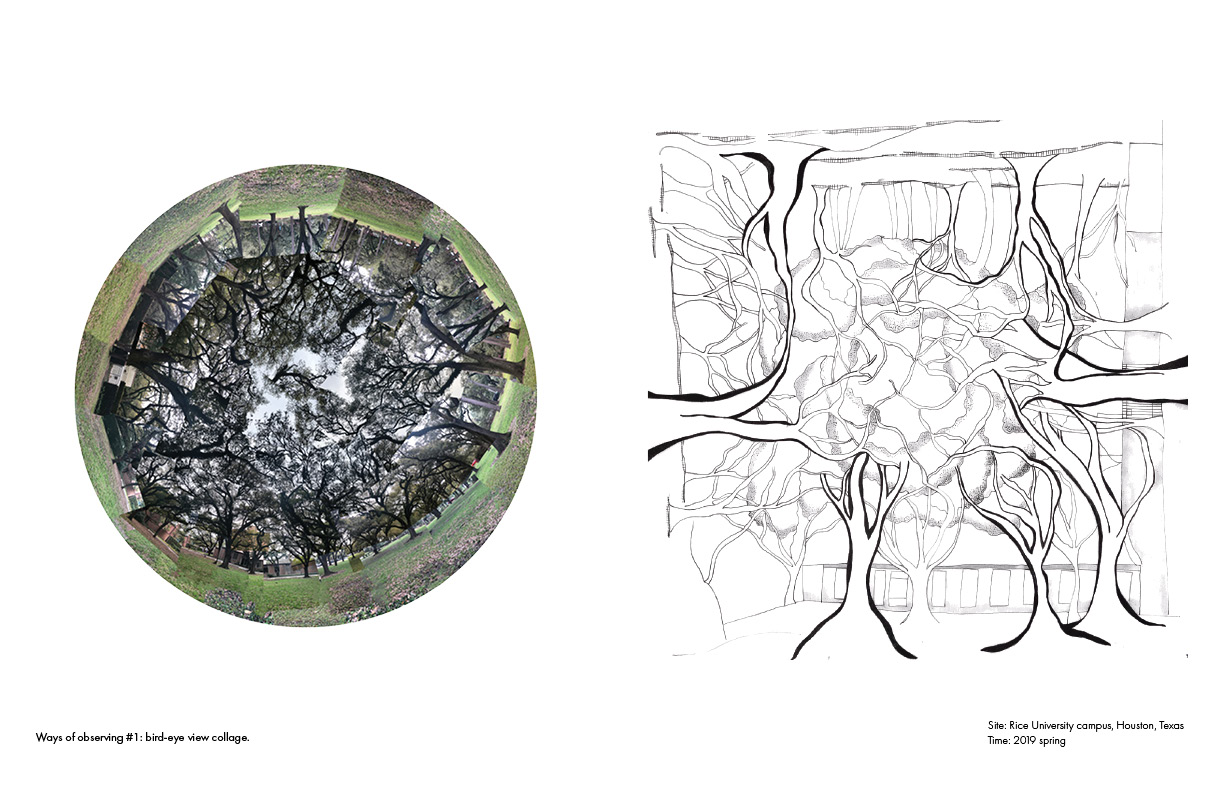
Sometimes research begins from above—
through stitched photographs and collaged bird’s-eye views.
Sometimes it begins in the hand:
a fallen leaf, a bark texture, a catalog of trees drawn in plan and section.
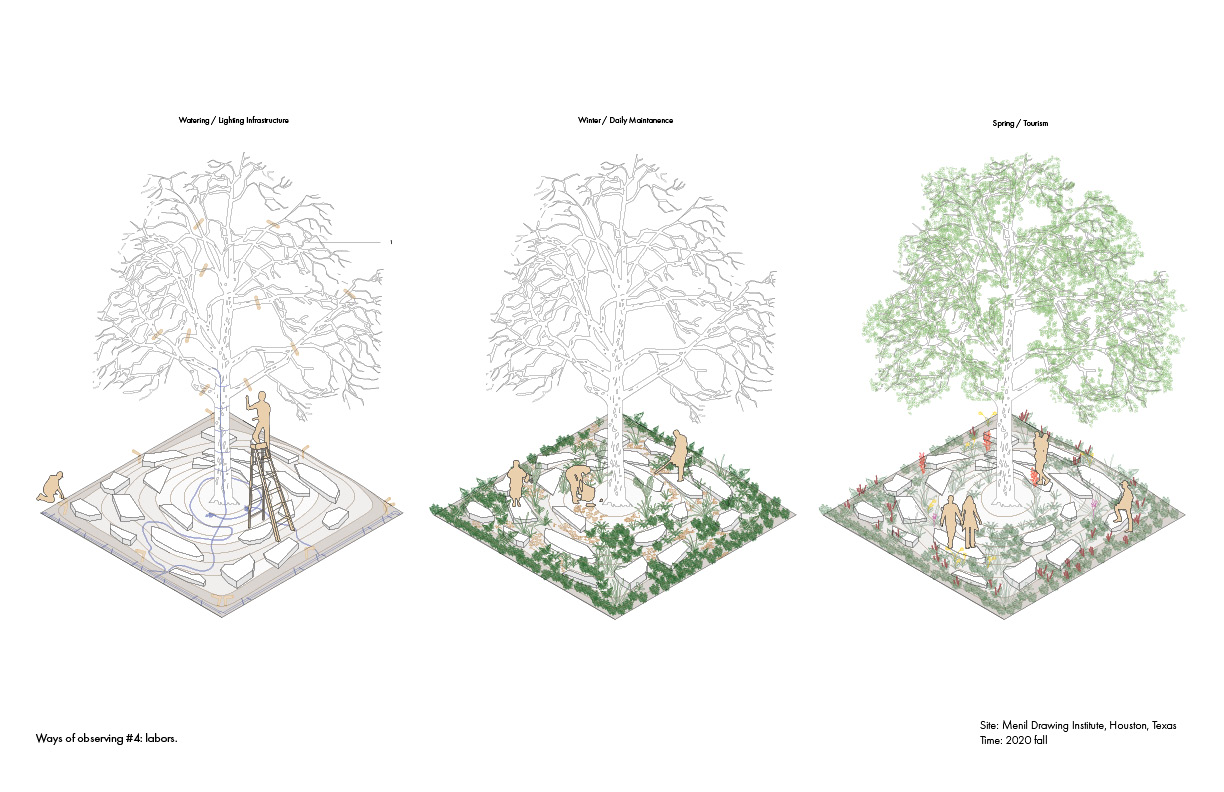
Elsewhere, the work turns speculative,
mapping seasonal change, cycles of maintenance,
and the quiet labor required to keep a landscape alive.
In these projects, drawing becomes more than representation.
It becomes a form of botanical inquiry,
a way of noticing, collecting, and translating the life of plants
into architectural knowledge.
To draw a site is not only to describe it,
but to enter more deeply into its conditions—
to understand the landscape not as background,
but as an active and living collaborator in design.
From various studios, independent work.


Currently in New York / New Jersey
© Elina Chen 2026